Gear guide
The honest kit list for the daily commute
You do not need a new bike to start commuting — but the right handful of items turns a punishing slog into the best half hour of your day. This is the equipment we actually use, in the order we would buy it.
First, the bike you already have
Almost any working bicycle will commute. The mountain bike in your shed wants smoother, narrower tyres; the road bike wants room for fenders and bigger tyres if the frame allows. What matters is not category but condition: true wheels, fresh cables, brakes that stop you wet. A ninety-euro tune-up improves a commute more than a nine-hundred-euro upgrade.
If you are buying specifically to commute, favour boring virtues: mounts for racks and fenders, clearance for 35 mm-plus tyres, a dynamo-ready front hub if your winter is dark. Internal gear hubs and belts shrug off weather that wrecks derailleurs. E-bikes deserve a special mention — for commutes over ten kilometres or hilly cities they are the single biggest recruitment tool bike commuting has ever had, and a good one repays its premium in bus fares within two years.
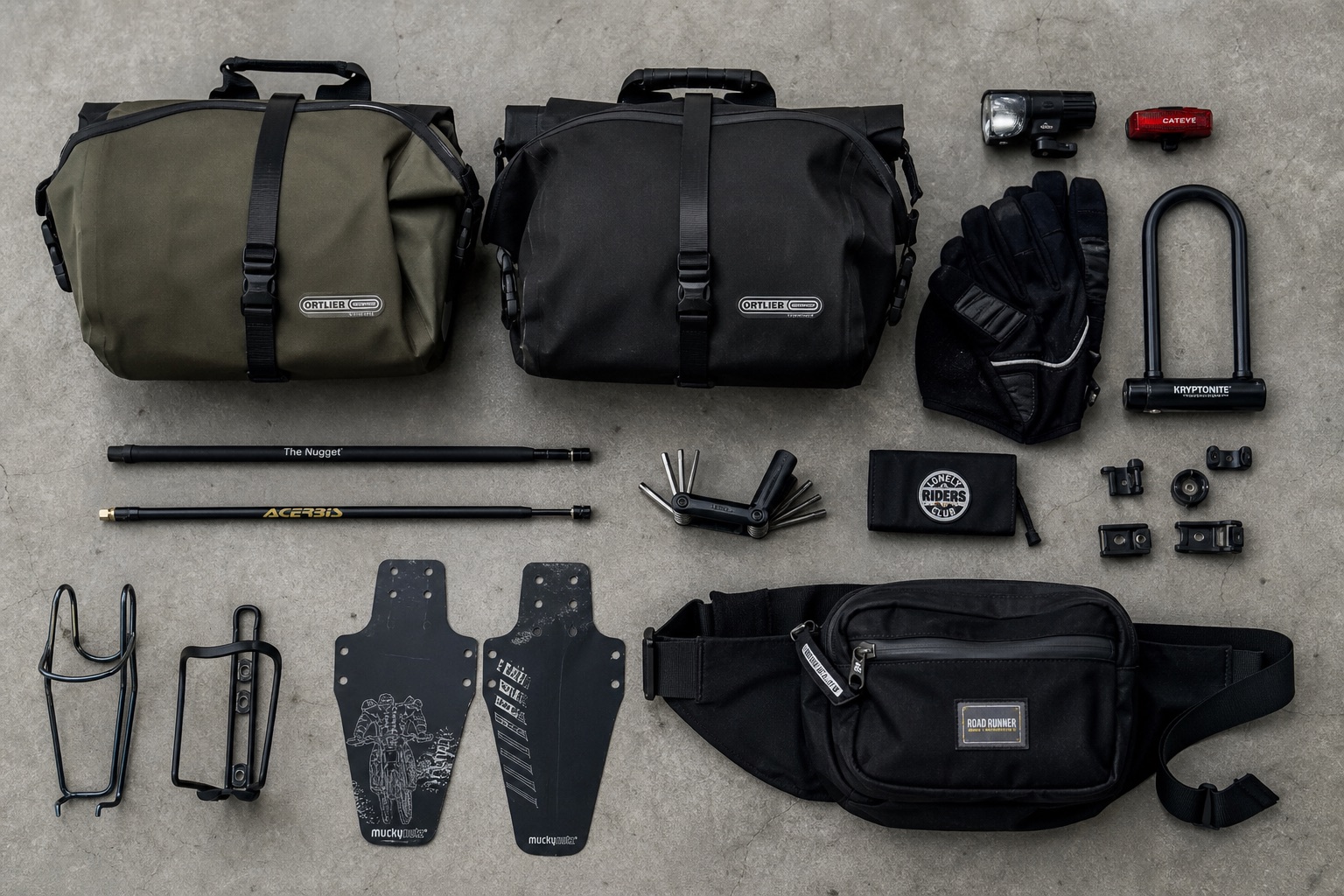
The big three: spend here
1. Lights. Not to see, or just to be seen — both. A front light under 300 lumens is a courtesy blinker; you want 600-plus aimed at the road for dark lanes, and a bright rear that survives rain. Recharge via USB, charge weekly, carry a spare strap. Our weather guide covers running lights in foul conditions; the short version is that in November your lights are your visibility strategy, full stop.
2. Lock. Budget roughly a tenth of the bike's value, minimum. A hardened folding lock or a fat D-lock through frame and rear wheel, to a fixed object that cannot be lifted over. Two locks of different types beat one expensive one, because thieves specialise. Cable locks are for cafés, not commutes. Register the frame number, photograph the bike, and check your household insurance actually covers it away from home.
3. Contact points. Saddle, grips, pedals, tyres. These four items decide whether you arrive fresh or battered. A wider saddle than you think you need, 35–45 mm tyres at lower pressure for city tarmac, and grippy flat pedals for everyday shoes unless you keep cycling shoes at the office. Do not commute on racing pressure: the city is not a criterium, and every pothole you survive is a vote for volume.
Carrying: the case against backpacks
A backpack is fine for laptops under a year of use; after that, sweat and shoulders vote for a rack. A single rear pannier of twenty litres swallows a laptop, a change of clothes, lunch and a lock, keeps the weight low, and ends the sweaty-back salute at 9 a.m. Courier bags look superb and suit short trips; for daily distances, rack-and-bag wins on comfort. Wet climates justify a welded liner or a roll-top; test yours with a newspaper and a shower before trusting it with electronics.
Clothing: the invisible commuter
The European tradition is to ride in ordinary clothes at ordinary speeds; the North American tradition is full kit. Both work — the trick is managing the last five minutes. Ride hard, arrive hot, and you will spend the morning damp: either slow down, or keep a shirt and deodorant at the desk. Bright colours and reflective details matter most in the dark half of the year; hi-vis ankle bands move when you pedal, and moving reflection is what drivers notice. A thin windshell, gloves and a cap cover ninety per cent of conditions; see our layering system for the rest.
The small kit that saves the day
In the pannier, always: a spare tube, tyre levers, a mini-pump, a multitool with a chain breaker, and the knowledge from a two-hour maintenance evening. Add a reusable zip tie, a few square centimetres of duct tape wrapped around the pump, and a twenty for the day everything happens at once. Practice your puncture repair at the kitchen table — the middle of a rainy rush hour is a bad classroom.
Fenders are not optional
If you commute year-round, fenders are the highest happiness-per-euro purchase in cycling. They keep the stripe off your back, keep your feet dry, protect drivetrain and companions, and let you ride through the puddle instead of around it. Full coverage, with a mud flap front and rear; clip-ons are a compromise that honest fenders make unnecessary. Your dry socks will thank us.
Total cost of the full honest list, added sensibly to a working bike: a few hundred pounds or dollars, spent once, amortised over years of rides and bus fares not bought. Compare that with a month of parking. When you are equipped, the next project is the ride itself — our route-planning guide will find you the calm way in, and the health guide will explain what those two daily half hours are quietly doing for you.