Route planning
Find the calm way in
The most important decision in bike commuting is made before you clip a helmet: which way you ride. The obvious route — the one the car takes — is usually the worst. Here is how to find the street your ride deserves.
Reject the red line
Mapping apps default to the fastest legal route, and for bikes that often means stroads: multi-lane arterials engineered for forty-mile-per-hour traffic, with drains, debris and door zones. A commuter on a stroad is a guest at a hostile table. The fix is almost always a parallel street one or two blocks away — a residential avenue, a canal towpath, a park edge — that costs two to four minutes and buys calm that compounds daily. Ride the red line once to know it; then leave it.
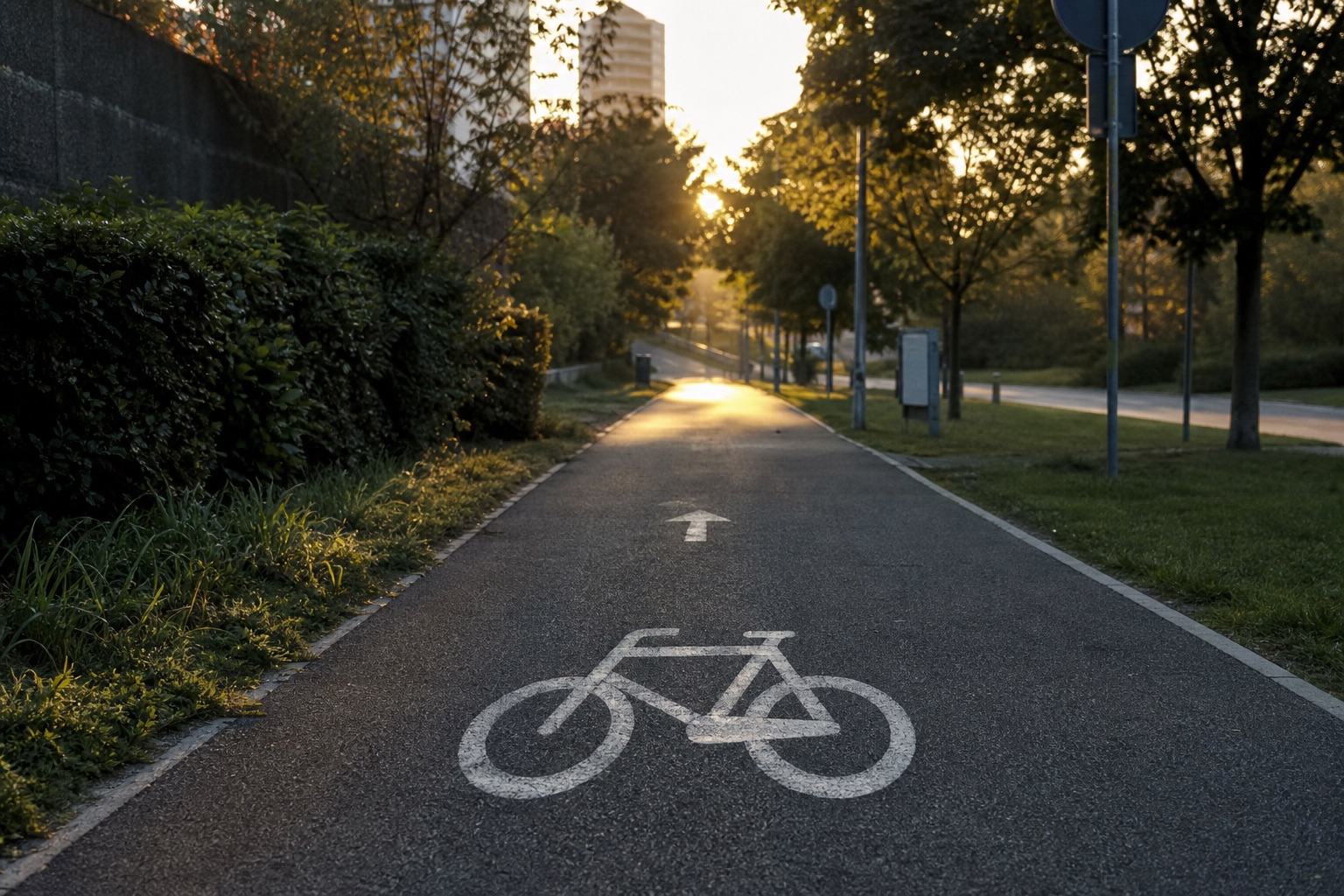
Three layers of a good commute
Think of your route as a sandwich. The middle layer is the long, pleasant stretch: greenway, riverbank, rail trail, boulevard with protected lanes. This is where the commute earns its keep — where you actually enjoy the bike. The first and last kilometres are the tricky crusts: neighbourhood streets to reach the greenway, and the final industrial block to the office. Spend your planning effort there. Walk or drive them first if you can; look for crossings with signals, cut-throughs, contraflow bike lanes and the quiet back gate of the business park that nobody uses.
The last hundred metres matter more than the first ten kilometres: a scary final junction can poison an otherwise perfect route, and a calm one can redeem a scruffy ride. If your destination truly has no safe approach, that is worth raising with your employer — our employer's guide covers what workplaces can do, from cycle parking to advocacy.
Tools, used with judgment
Digital mapping has transformed route planning: cycling layers in the big map apps, dedicated planners with surface and traffic-calming data, heatmap overlays showing where cyclists actually ride — a street thick with recorded rides is a street that works. OpenStreetMap-based tools excel at bike-specific detail like barriers, surfaces and path types. Our resources page lists the ones we use weekly. Three rules for all of them: check the surface (gravel means different things to different bikes), check the hours (some park paths close at dusk), and trust local riders over any algorithm — the commuter you meet at the lights knows today's roadworks, and asking is free.
Timing: the honest maths
Time your route as three numbers: clear-conditions time, wet-Wednesday time, and the first-week time while you are still checking the map. Plan for the second number. City cycling averages 15–20 km/h including lights — a five-kilometre commute is twenty to twenty-five minutes, which after parking, walking and elevator time is competitive with almost any car. Longer commutes reward the multimodal trick: ride to the station, take the train, keep a folding or a second bike at the far end. Many cities allow bikes on off-peak trains; learn your window and the commute radius doubles.
The test-run ritual
Ride a new route for the first time on a weekend, in daylight, with no deadline. You are auditing, not commuting: note blind corners, awkward turns, the stretch where the lane disappears, where glass collects, which traffic light never seems to change. A smartphone pocket-mount for a single scouting ride is worth the awkwardness. Adjust, then ride it again. Only when the route holds no surprises should it carry your Monday morning — the first commute on a new job should be boring, because you already did the interesting part on Sunday.
Seasons change the map
A route is a living thing. The leafy lane that is August's highlight is October's slick of wet leaves and December's unlit trench; the towpath that dries out in spring floods after every March storm. Keep two or three validated variants — the summer way, the winter way with better lighting, the stormy-day way on gritted roads — and switch without sentiment. Our all-weather guide covers the equipment side of the same problem.
And leave room for joy. The disciplined route optimiser arrives at the same twenty-five minutes every day; the happy commuter sometimes takes the long way along the river because the light is good and there are herons. Efficiency is a tool, not a religion — the day the commute becomes pure logistics is the day to detour through the park, a point our health guide makes in more detail. Route found? The next question is what to carry it on, and the gear guide has the honest answers.