All-weather riding
Outride the forecast
There is no bad weather, only bored clothing — and about forty days a year when the commute becomes a negotiation. This is the field guide to rain, cold, heat and wind, written by people who stopped checking the forecast.
The system, not the outfit
All-weather commuting is a layering system, not a magic jacket. The core is three layers: a moisture-wicking base (never cotton next to skin), an insulating middle you can remove, and a shell that stops wind or rain — occasionally both, and never a boil-in-the-bag bin bag. The magic is subtraction: you should start the ride slightly cool, because four minutes of pedalling fixes that, while starting warm means arriving damp from the inside. Zips are your throttle: pit zips, two-way front zips, cuff adjustments. Fenders, covered at length in the gear guide, are the fourth layer — the one your back and shoes wear.
Rain: attitude and a good shell
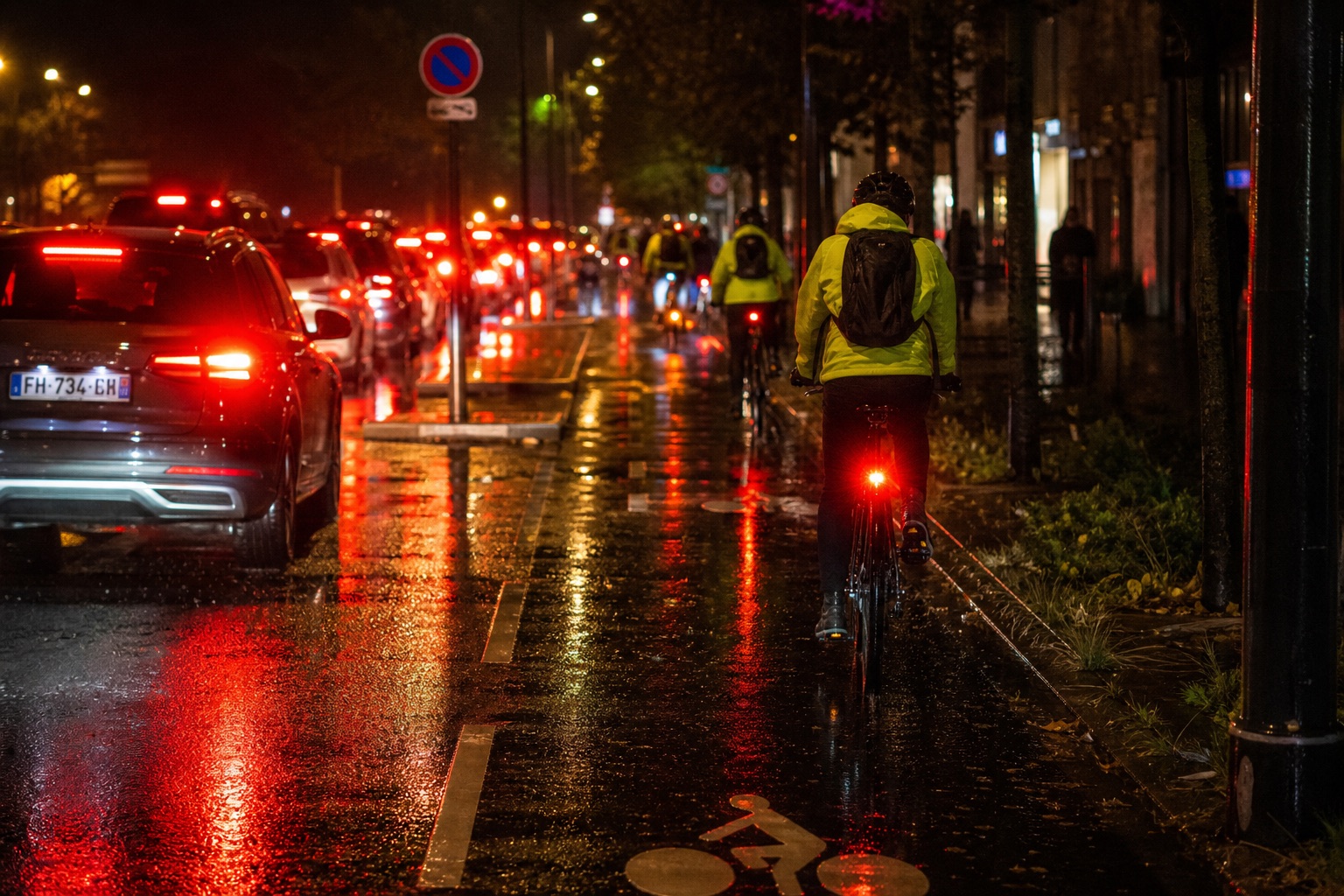
Rain riding is 60% psychology and 40% a properly sealed jacket with a hood or cap brim, because cold water down the collar ruins any fabric's rating. Expect to be damp — the goal is warm-and-damp, not dry — and keep a dry outfit at the office so the ride never costs you dignity. Tyres deserve attention: more pressure released, not added, wider if the frame allows, and a slower approach to painted lines and metal covers, which turn to ice under the wet. Lights on in rain regardless of hour; visibility drops for everyone, and a lit cyclist in grey rain is worth three unlit ones in sunshine. Pack the pannier the night before forecasts turn — the 7 a.m. version of you makes worse decisions than the 10 p.m. version.
Cold: the extremities doctrine
Torso warmth is easy; the ride is won and lost at the edges. Hands, feet, ears and face limit winter commuting far more than legs, which are furnaces. Budget accordingly: proper full-finger gloves or lobster claws, wool socks with room to wiggle (cramped toes go numb faster), shoe covers if you ride clipless, and a thin hat under the helmet. Below about −5 °C, add a buff over the face for the first kilometres and breathe through it. Watch for black ice in the first and last kilometres — bridges and shaded dips hold it after open road has dried — and drop tyre pressure for contact patch. Studded tyres sound extreme until the winter you try them; in icy cities they are the difference between riding till March and taking the bus in December. Our route guide's winter variant belongs here too: lit, gritted main roads beat the dark towpath from December to February, whatever summer thinks.
Heat: change the clock, not the habit
Summer's problem is the reverse: arriving presentable. The solutions are schedule and pace. Ride earlier — even thirty minutes transforms a 30 °C commute into a 22 °C one — and slower, letting the wind do its work. Hydrate before you leave, carry more than feels necessary on days over 28 °C, and learn the early signs of heat exhaustion (dizzy, headache, goosebumps in heat) so you can stop, shade and sip rather than push. Clothing goes loose and light-coloured; a soaking of the cap or buff at a fountain is primitive, brilliant evaporative cooling. Sunscreen on the neck and left arm — commuters get lopsided sun — and sunglasses that handle low evening angles. The Summer Challenge is built around exactly these tactics: it is the season of the long way home, managed sensibly.
Wind: the invisible hill
Headwinds break more resolutions than rain. The brutal, liberating truth: you cannot beat the wind, only date it. Ride the windward leg outbound while fresh, let it push you home; gear down and spin instead of grinding; tuck slightly and accept the extra ten minutes as strength training you did not ask for. Check the direction with your morning coffee the way other commuters check congestion. Crosswinds deserve respect on exposed bridges — take the lane early so a gust cannot shove you into the gutter, and keep a loose grip; tension steers.
The bike in the seasons
Weather ages machines faster than riders. Winter's salt demands a monthly chain-clean-and-lube and a spring health check; rain grits brake pads into sandpaper, so inspect them monthly; summer thins nothing but your patience with punctures — dry roads grow thorns and glass. A standing monthly twenty-minute check — tyres, pads, chain, bolts, lights — keeps the fleet honest, and the two-hour maintenance evening we recommend in the gear guide pays for itself every season. Keep a door-top towel at work and a mat under the bike; HR's attitude toward puddles is a genuine retention issue, covered diplomatically in the employer's guide.
Done well, all-weather riding is quietly transformational: the forecast stops being a veto and becomes a wardrobe question. Commuters who master the four seasons report the same quiet pride — the day you roll into a car park of snow-dusted cars, warm and awake, is worth every glove review. Join the club via the Commute Challenge, and read the health guide to see what those foul-weather miles are quietly building.